

Accent Modification: the /a/ sound
If you’re learning English in Canada, the /a/ vowel sound in words like ‘father’, ‘walk’, and ‘job’ is an important one to master. The /a/ sound is a long vowel sound. It’s the same open vowel sound that a doctor asks you to make when inserting a tongue depressor in your mouth. When you say “ah” at the doctor’s office, you are naturally producing that low, open /a/ sound. This low “a” sound plays a key role in clear pronunciation. Below is the tongue position for the /a/ sound.
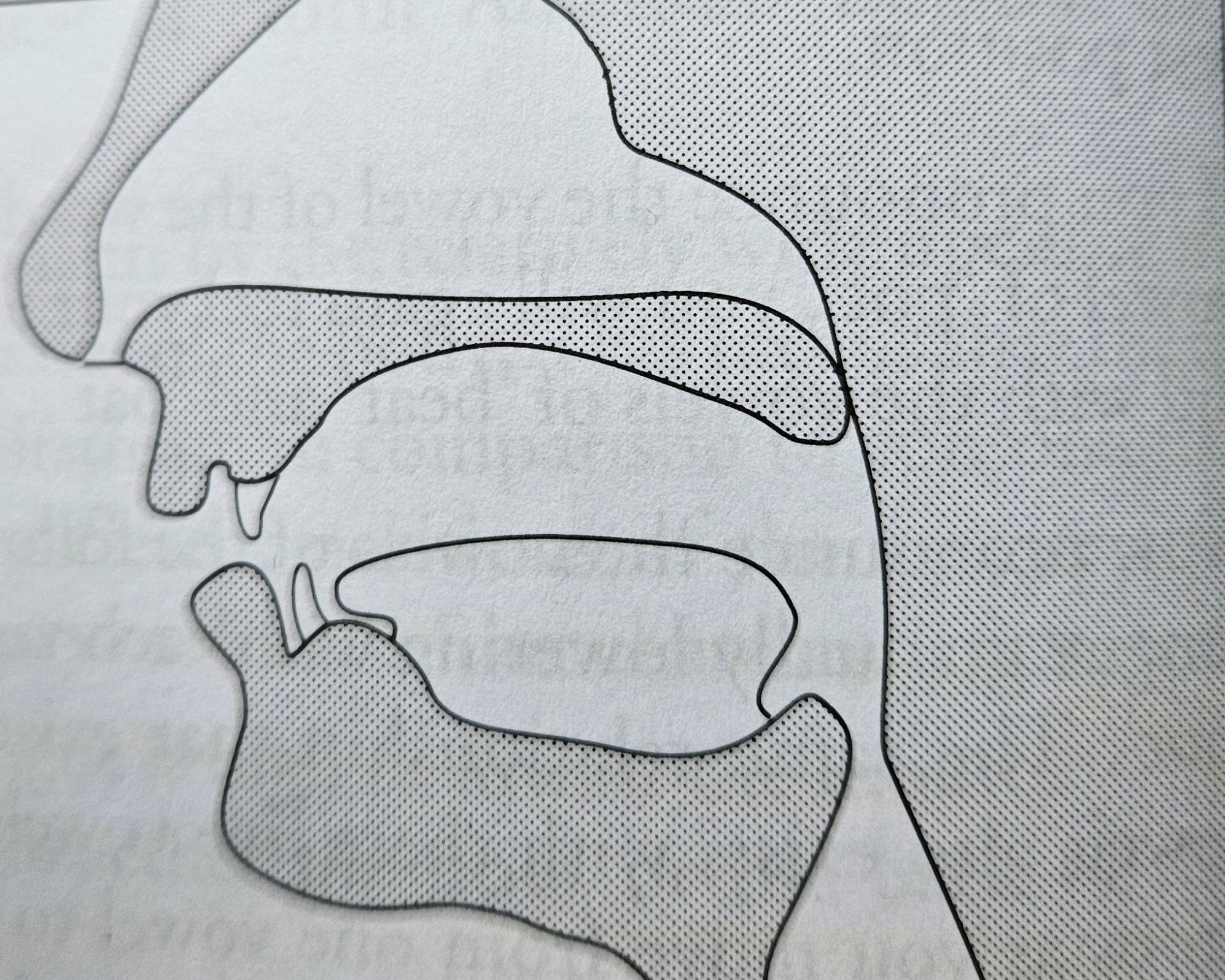
When you pronounce the /a/ sound, your mouth should open quite wide, (more than for any other vowel sound). Your tongue stays low in the mouth and moves slightly toward the back. Ensure that the back part of your tongue is low in the mouth. Your lips are relaxed. Do not round your lips and do not spread the sides of your lips. The sound should feel open and deep compared to many other vowel sounds in English.
You can hear this vowel in words such as not, cost, bottle, father, cautious, caught, saw, law, want, talk, walk, model, palm, follow, policy, caller, novel, August, audio, thought, car, art, and officer.
One helpful way to improve this sound is to focus on mouth opening. Many learners do not open their mouths enough, which can make the vowel sound unclear or too short. Try exaggerating the openness at first. Stand in front of a mirror and check that your jaw drops slightly more than you think it should. A wider opening usually leads to a clearer sound.
Words like car, card, cart or far, farm, and part, all contain the /a/ sound, but the /r/ sound which comes after it ‘colours’ or changes the sound of the /a/ slightly.
Listening practice is equally important. Pay attention to Canadian speakers in interviews, podcasts, or workplace conversations. Notice how open and relaxed the vowel sounds. Try to imitate not just the sound itself, but also the stress pattern of the full word.
Pronouncing this vowel clearly can make a noticeable difference in professional and everyday communication. Words like market, target, partner, and charge appear frequently in business and social contexts. A strong, consistent vowel sound improves clarity and reduces misunderstandings.
When practicing, record yourself and compare your pronunciation with native Canadian speakers. Focus on three physical details: open mouth, low tongue, relaxed lips. These small adjustments can significantly improve accuracy. With regular practice and careful attention to mouth position, you can produce it clearly and confidently in conversation.
Accent modification: the /a/ sound

